
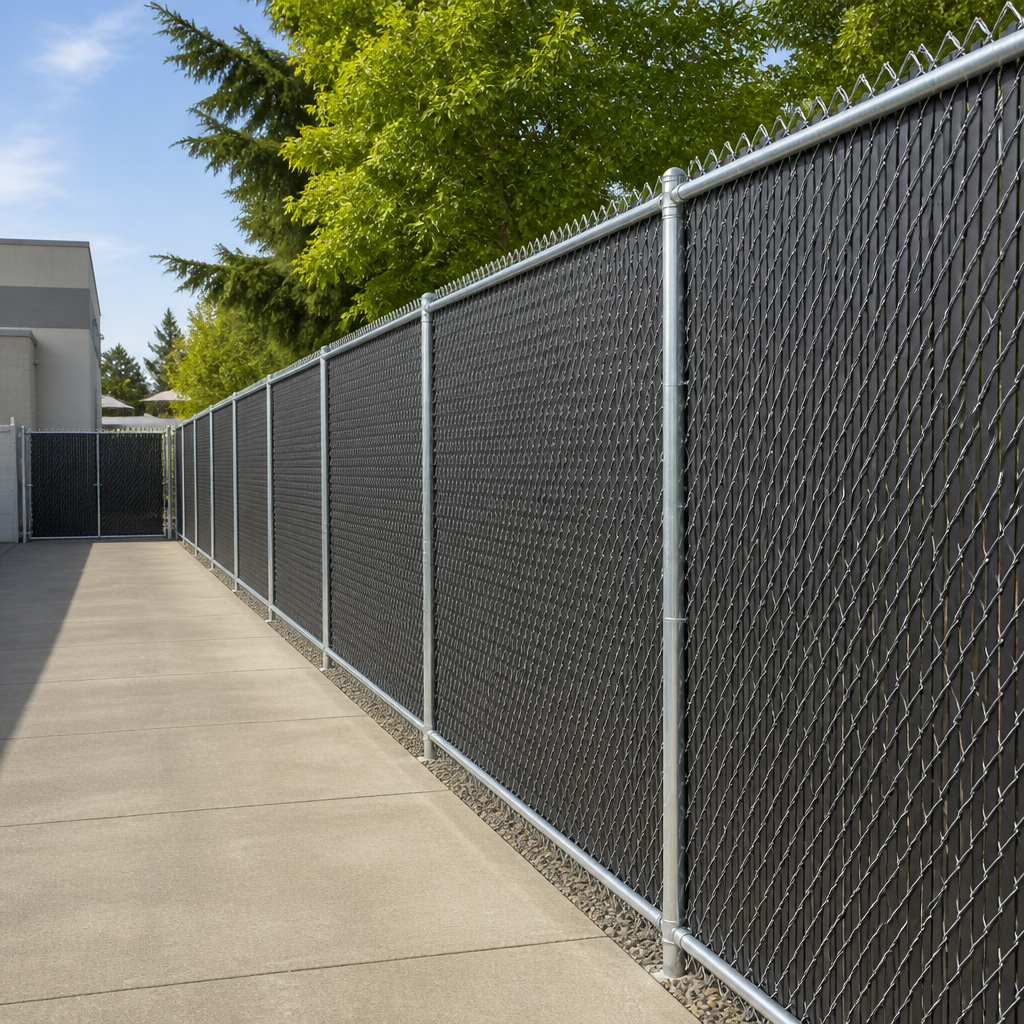
Chain-link fence installation in Fort Worth is the practical property-line and containment job: mesh, posts, top rail, tension wire, and gates. It is typically the leaner ticket next to wood privacy, vinyl, or ornamental iron because there is less material and a faster hang once posts are set. It is not a throwaway price. Height, wire gauge, coating, walk and drive gates, corners, and tearout all show up on a real quote.
Which fence type is the better value — chain-link, wood, or vinyl?
Value depends on what the fence has to do. Chain-link wins when you need a clear line, a dog run, a side yard, or a long back property without paying for privacy boards. Wood privacy — cedar, board-on-board, horizontal — wins when the point is blocking the view. Vinyl wins when you want that privacy look without staining. Ornamental metal is a different product again: open, decorative, often paired with custom gates or pool-code work. Comparing a chain-link bid to a six-foot cedar privacy bid as if they were the same fence is how homeowners get confused. They are not the same fence.
On chain-link itself, the cheap number is often a lighter gauge, a shorter height, or a quote that skips removal. Heavier mesh and a proper top rail cost more and stand up better to kids, dogs, and the odd Texas storm leaning on a long run. Black vinyl-coated mesh costs more than bright galvanized. Slats for privacy turn chain-link into a hybrid: more material, more wind load, more labor. Ask for that as its own line, not a verbal maybe.
Chain-link is priced by height, gauge, gates, and how many corners the run has to turn — not by the word cheap sitting next to fence in a search bar.
What makes two chain-link estimates for the same yard look nothing alike?
Measurement. A map-trace misses the jogs around an AC pad, a gate that has to swing past a meter, and the extra terminal posts every corner and end demands. Terminal posts, not line posts, are the expensive ones. A crew that under-counts them will either come back with a change order or stretch the install until the fabric looks tired at the ends. Driven posts can be right in open, consistent soil. Cemented posts are the usual call at terminals, gates, and anywhere North Texas clay and wind will work a hole loose. Ask which method is in the quote. It is a durability question, not a trivia one.
Shared property lines add a second conversation. Who pays, who picks the product, and where the fabric sits should be settled before the first hole. A survey when pins are gone is cheaper than moving a finished fence. Setbacks and easements along alleys and utilities in Fort Worth neighborhoods are the other common surprise — the fence has to live where the rules allow, not only where the grass looks even.
How long does a residential chain-link job usually take?
A clean backyard run is often measured in a day or two once materials are on site, not a week of disruption. Long ranch-adjacent stretches, lots of corners, extra gates, and full tearout add time. Wet ground delays concrete. Responsiveness on the estimate is part of the job: if it is hard to get a walk scheduled, the install calendar is usually no better.
Ft. Worth Fence and Patio prices chain-link on site with the same transparent scope used on wood, vinyl, and pipe fencing — footage, posts, gates, and removal written down. If you need a property-line fence that is honest about what it is, that on-site estimate is the number that matters.